
Life Here · January 13, 2026
Flood Irrigation in North Central Phoenix: How It Works, What It Costs, and Why It Exists
How SRP flood irrigation works in North Central Phoenix, how the delivery schedule runs, what owners are responsible for, and how it connects to Murphy's original 1890s water development.
The short answer
Flood irrigation delivers SRP canal water onto North Central Phoenix lots on a rotating schedule — subdivision accounts receive 18 runs per year — with SRP responsible up to the delivery gate and the property owner responsible for everything after it; it is the infrastructure that makes the corridor's lawns and mature trees possible.
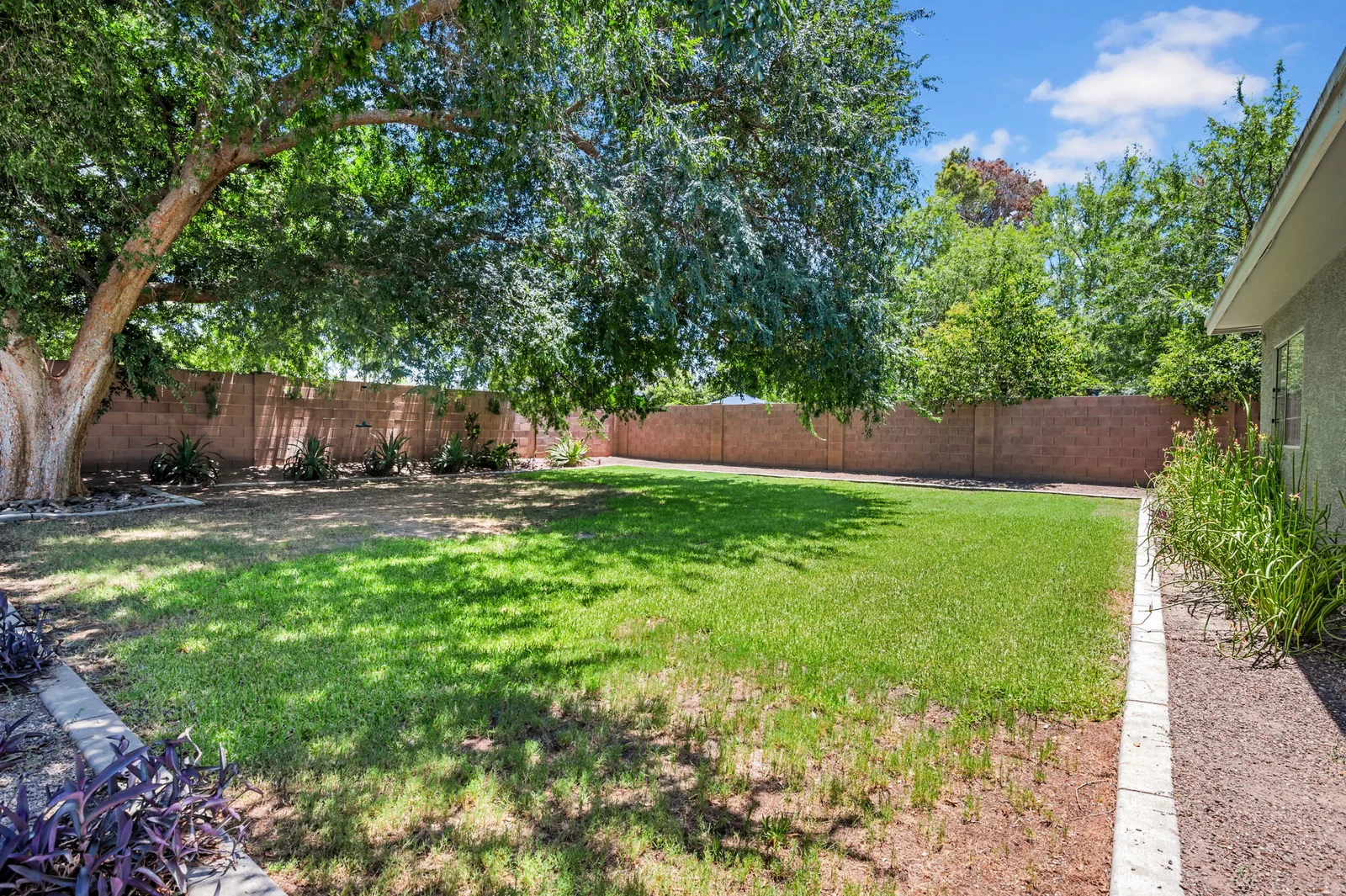
Newcomers see six inches of water standing in a neighbor's front yard and assume a pipe has burst. Nothing has burst. That is the reason the block looks the way it does, and it is the oldest continuously operating thing about this neighborhood.
This guide covers how the system works, what the owner is actually responsible for, how the schedule runs, what to verify before you buy an irrigated lot, and where the whole thing came from.
Where it came from
William J. Murphy platted the Orangewood subdivision in 1895 — two square miles between 7th Avenue and 7th Street, Northern Avenue to Bethany Home Road — as rural homes on large estate lots with citrus groves. Citrus groves need water, so the development came with a water system.
An irrigation lateral dating to Murphy's original water development is still active and still delivers water to residential lots. A 2002 SRP survey identified it as among the oldest in the city and worth preserving. The full development story is in the corridor's history, and the trail that came out of the same project is covered in the Murphy Bridle Path guide.
How the system works today
The SRP system is gravity-fed, and water moves through it 24 hours a day, seven days a week. An SRP zanjero opens the SRP delivery gate to release water into your neighborhood. From that gate onward, it is the property owner's responsibility to install, operate and maintain the neighborhood irrigation system.
Zanjero is the old Spanish word for the ditch rider who opens the gates, and it is still the official job title at SRP. When people here talk about the zanjero coming, that is not folklore — it is an SRP employee doing a job with a title older than the state.
The responsibility line matters
That handoff at the delivery gate is the single most important thing for a buyer to understand. SRP delivers to the gate. Everything downstream — the neighborhood laterals, the valves, the standpipes, the berm around your yard — belongs to owners. On some blocks that is handled by an organized association with a maintenance history. On others it is handled informally by whoever has done it for twenty years.
Ask which situation you are buying into. It is a fair question, it has a real answer, and the answer affects both your annual cost and your Saturday mornings.
The schedule
- Subdivision accounts receive 18 irrigation runs per year on predetermined delivery days, though the actual rotation shifts as owners adjust orders for weather and property conditions.
- Water can arrive at unconventional times, including late at night. SRP rotates start times through the year so the inconvenient slots get shared around.
- Deliveries cannot be scheduled during dry-ups — maintenance windows that happen year-round, including a scheduled annual dry-up for canal cleaning and repair.
- Larger Water Balance accounts, meaning 1.25 acres or more, can request specific delivery dates and times, with nothing guaranteed. SRP recommends ordering two to three days in advance, because most scheduling happens the day before delivery.
Finding your own dates
Check your schedule through SRP's website quick-view tool, your online account portal, or the SRP Water mobile app. The SRP Water Contact Center is 602-236-3333.
We do not publish irrigation dates on this site, because yours depends on your account and your neighborhood rotation, and a wrong date is worse than no date. The homeowner's almanac collects the official links in one place along with trash day, schools and the seasonal calendar.
What it costs
Cost is account-specific. It depends on your acreage, your account type and how many runs you take, so any figure quoted as a flat annual number for 'a North Central lot' is a guess dressed up as a fact. Get the actual number for the actual parcel from SRP or from the seller's account history before you buy.
The honest framing is comparative rather than absolute: for a large lot with grass and mature trees, bulk delivered canal water is the reason the yard is affordable to keep alive at all. Replicating that canopy on municipal water and drip is a materially different proposition.
What to verify before you close
- Whether the parcel actually has an irrigation account, confirmed with SRP rather than a listing remark.
- Whether the berm is intact and the yard grades correctly — water that cannot be held is water you paid for and lost to the street.
- Who maintains the neighborhood system downstream of the delivery gate, and whether there is an association, a shared cost, or an informal arrangement.
- Whether previous owners kept the account current, since lapses can complicate reinstatement.
- How the mature trees on the lot have been watered, because a large ash or citrus that has lived on flood water for decades does not adapt gracefully to drip.
- What the block's schedule actually looks like in July. Ask a neighbor.
Irrigation day, in practice
Water arrives at the gate, spreads across the lot, sits several inches deep, and soaks in over a few hours. Children float in it. Dogs lose their minds. The whole street smells like wet grass afterward, and in a Phoenix summer that smell is worth more than most upgrades a builder can sell you.
It is also a genuine obligation with a schedule that does not care about your plans, occasionally at two in the morning. Both things are true, and buyers should hear both before they fall in love with a green lawn in April. The seasonal rhythm around it is in the almanac.
Does irrigation affect value?
Irrigated lots are one of the features buyers here ask for by name, alongside lot size and canopy. We are not going to publish a premium percentage, because isolating irrigation from lot size and location would require a matched-pair study we have not done. What we can show is what has traded: across a sample of 22 recent closed North Central sales, the median close was $1,290,000 on a median lot of 0.31 acres. Every figure here is computed from a sample of 22 North Central sales closed in the past 12 months, drawn from Trevor's ARMLS IDX feed. A 12-month sample is not the whole market — it is a read on what has actually traded, not a valuation of any particular house.
For the lot-size picture by zip, see the lot size guide. For where the irrigated pockets sit, see the corridor map and the street guide.
Where to go next
- The homeowner's almanac — official SRP and City of Phoenix links.
- Moving to North Central Phoenix — the relocation guide, irrigation included.
- Homes for sale between the sevens.
- Ask Trevor whether a specific address is irrigated and what the block's system is like.
Questions people ask
- How does flood irrigation work in North Central Phoenix?
- The SRP system is gravity-fed and moves water 24 hours a day, seven days a week. An SRP zanjero opens the delivery gate to release water into the neighborhood, and from the gate onward the property owner is responsible for installing, operating and maintaining the neighborhood irrigation system.
- How many irrigation runs do you get per year?
- Subdivision accounts receive 18 irrigation runs per year on predetermined delivery days, although the rotation shifts as owners adjust orders for weather and property conditions.
- What is a zanjero?
- Zanjero is the old Spanish word for the ditch rider who opens the gates, and it is still the official job title at SRP for the person who opens your delivery gate.
- What does flood irrigation cost?
- Cost is account-specific and depends on acreage, account type and the number of runs taken, so the reliable number comes from SRP or the seller's account history for that specific parcel rather than from a published average.
- Can I choose my irrigation delivery time?
- Water can arrive at unconventional times, including late at night, and SRP rotates start times through the year. Water Balance accounts of 1.25 acres or more can request specific dates and times with nothing guaranteed, and SRP recommends ordering two to three days in advance.
- What is a dry-up?
- A dry-up is a maintenance window during which deliveries cannot be scheduled. They happen year-round, including a scheduled annual dry-up for canal cleaning and repair.
- How old is the irrigation system in North Central Phoenix?
- An irrigation lateral dating to William J. Murphy's original water development, begun with the 1895 Orangewood subdivision, is still active and still delivers water to residential lots. A 2002 SRP survey identified it as among the oldest in the city and worth preserving.
- How do I find my irrigation schedule?
- Use SRP's website quick-view tool, your online account portal, or the SRP Water mobile app. The SRP Water Contact Center is 602-236-3333.