
Market Data · March 10, 2026
North Central Phoenix Lot Sizes: Why Dirt Drives Value Here
What North Central Phoenix lots actually measure in recent closed sales, how irrigation and setbacks shape what you can build, and why lot quality outranks finishes.
The short answer
In a sample of 22 recent closed North Central sales from Trevor's ARMLS IDX feed, the median lot measured 0.31 acres — about 13,504 square feet — with lots ranging from 0.09 to 1.01 acres. Lot size, irrigation and block quality account for more of the value spread in The Corridor than any interior finish package.
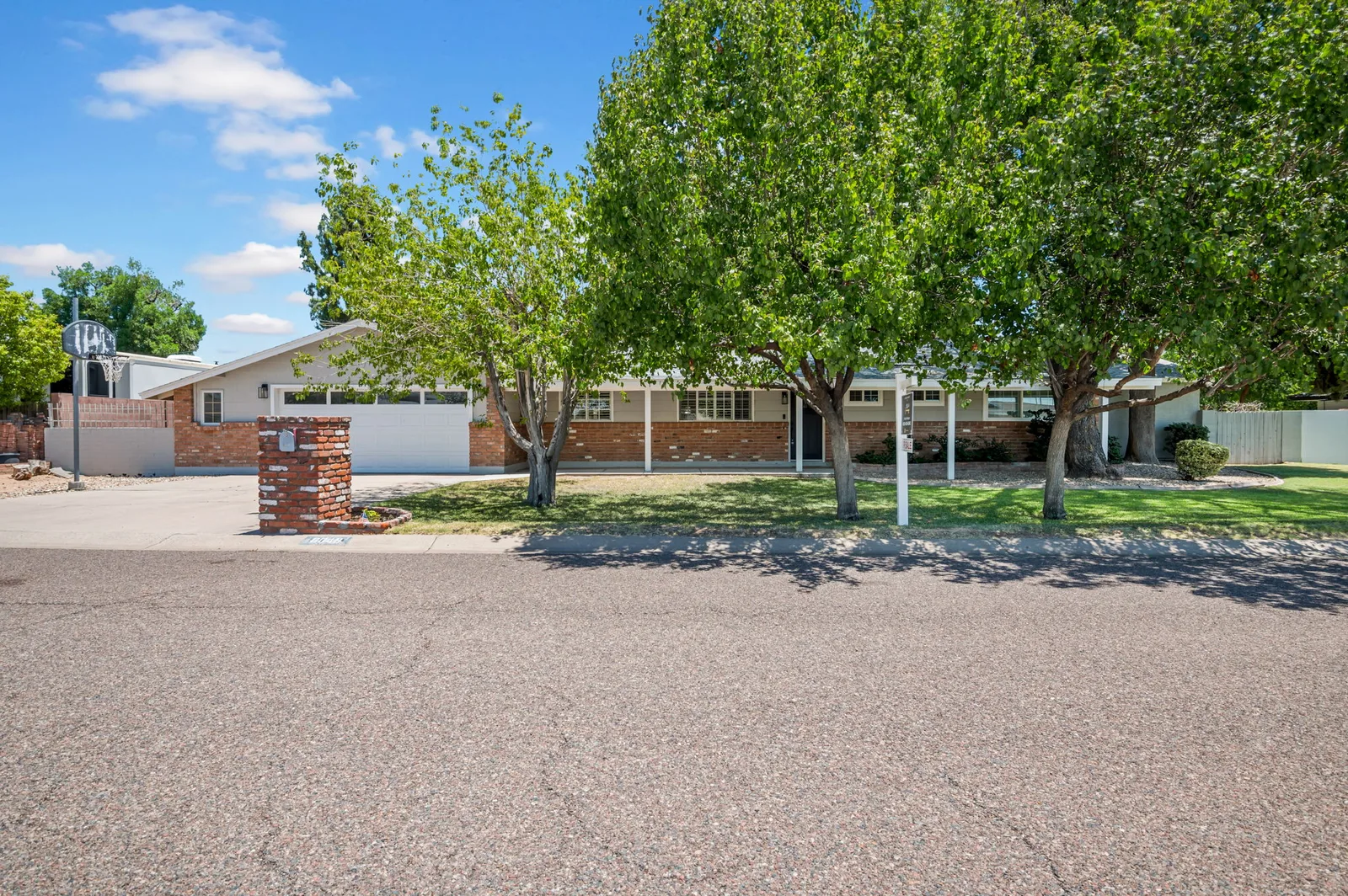
Every buyer tour in The Corridor eventually arrives at the same realization, usually while standing in a back yard: the house is the smaller part of the purchase. In a neighborhood where the housing stock is broadly similar in age and where most of it has been renovated at least once, the dirt is what varies, and the dirt is what you cannot change.
This piece puts numbers to that from real closed sales, then explains what those numbers mean for what you can actually do with a lot.
What recent closed sales actually measure
Across 22 recent closed North Central sales in Trevor's ARMLS IDX feed, the median lot was 0.31 acres, roughly 13,504 square feet. The smallest in the sample was 0.09 acres and the largest was 1.01 acres.
Distribution matters more than the median here: 10 of the 22 sales sat at a third of an acre or larger, while 5 came in under a quarter acre. That is the corridor in one line — a majority of generous lots, with a real tail of compact ones, usually closer to the arterials.
Every figure here is computed from a sample of 22 North Central sales closed in the past 12 months, drawn from Trevor's ARMLS IDX feed. A 12-month sample is not the whole market — it is a read on what has actually traded, not a valuation of any particular house.
By zip code
Read the sample sizes before the medians. 85013 contributes only 3 sales here and 85014 contributes none, so those rows are illustrative rather than conclusive. The pocket explorer shows the same breakdown alongside price data, and the street guide covers which streets appear in each zip.
| Zip | Sales in sample | Median lot | Range in sample |
|---|---|---|---|
| 85012 | 6 | 0.39 ac (16,771 sq ft) | 0.16 – 1.01 ac |
| 85013 | 3 | 0.39 ac (16,988 sq ft) | 0.23 – 0.89 ac |
| 85020 | 5 | 0.30 ac (13,068 sq ft) | 0.25 – 0.34 ac |
| 85021 | 8 | 0.28 ac (12,415 sq ft) | 0.09 – 0.36 ac |
What lot size actually buys you
Depth buys privacy and a genuinely usable back yard, plus the option to add square footage, a casita or a pool later within setbacks. Width buys street presence and sometimes a side-entry garage. Irrigation buys grass and the canopy standing in it. Together those three explain most of the price gap between two homes that look nearly identical on a listing page.
- A pool changes what a lot needs to be — see the pools guide.
- A casita or guest house needs both room and the right zoning — the casita guide covers the trade-offs.
- Mature trees need water and root room, which is why canopy and lot size are effectively the same conversation here.
- Flood irrigation needs intact berms and a functioning delivery point — start with the almanac.
Setbacks, coverage and buildability
Before you assume you can expand, verify zoning, setbacks and lot coverage for the specific parcel with the city. Two lots of identical size can have very different buildable envelopes. Some deep lots are constrained by easements or drainage that are not visible on a walkthrough, and some modest-looking lots turn out to be far more buildable than their neighbors.
This is the diligence item that most often changes a buyer's plan after contract, which is exactly the wrong time to learn it. Ask the question during the tour, not during the inspection period.
When the lot argues for a rebuild
On certain parcels, the land is worth enough relative to the structure that a remodel stops making sense. That calculation depends on lot size, block, and what the existing house would cost to bring to standard. Teardown versus remodel walks through how that math is built, and new construction in the corridor covers what actually gets built when it goes that way. If you are keeping the house, remodeling a Phoenix ranch is the more useful read.
Why lot size and price per square foot fight each other
This is the connection buyers miss most often. Because land value attaches to the lot rather than the building, a smaller house on a large lot posts a high price per square foot and looks expensive, while a big house on a small lot posts a low one and looks cheap. The sample median here is $448 per square foot with a range from $296 to $605, and lot size explains a large share of that spread. The full explanation is here.
For sellers with a large lot
If your value is in the dirt, the listing has to say so in a way a buyer from out of state can understand — because they cannot see irrigation, root systems or buildable envelope in a photo. That means measuring and documenting the lot properly, showing the yard in the season it looks like itself, and building the pricing argument on land rather than on a per-foot comparison to a neighbor. Preparing a home for market and how listings get marketed cover the execution, and the seller page covers the whole arc.
Find the lot
Lot size is one of the harder things to shop for from a portal, which is a decent argument for looking at the corridor home search with a person rather than alone, and for being on the private list when a large irrigated lot comes up quietly. If you own one already and want to know what it is worth today, start with a valuation.
Questions people ask
- How big are lots in North Central Phoenix?
- In a sample of 22 recent closed sales from Trevor's ARMLS feed, the median lot was 0.31 acres, about 13,504 square feet, with lots ranging from 0.09 to 1.01 acres. That is a sample of recent closed sales, not a survey of the whole corridor.
- How common are half-acre lots here?
- They exist but they are not the norm. In this sample, 10 of 22 sales were a third of an acre or larger, and only a small number reached half an acre or beyond. Larger parcels are exactly the ones that tend to trade quietly.
- Why does lot size matter so much in North Central Phoenix?
- Because the corridor is landlocked and irrigated lots with mature canopy cannot be replicated. Finishes can be redone at any time; dirt, water and trees cannot be added later, so land quality drives more of the value spread than interior condition does.
- Can I add on to a house on a large lot here?
- Often, but never assume it. Verify zoning, setbacks, lot coverage and any easements or drainage constraints for the specific parcel with the city before you buy on that basis.
- Do all large lots in the corridor have flood irrigation?
- No. Irrigation is parcel-specific and must be confirmed with the provider. A large dry lot and a large irrigated lot are different products, and the difference shows up in both the yard and the price.
- Is a bigger lot always worth more?
- Not automatically. A deep lot on a quiet interior block is worth more than the same acreage backing an arterial, and a large lot with drainage or easement constraints may be worth less than a smaller, cleanly buildable one. Size is the starting point, not the answer.
- Which zip has the largest lots in the corridor?
- In this sample the medians by zip are close enough, and the sample sizes small enough, that ranking them would overstate what the data supports. The table above shows each zip's sample size alongside its median so you can judge how much weight it deserves.